01
PHYSICAL PDF PAGES 17–19
Before offering help
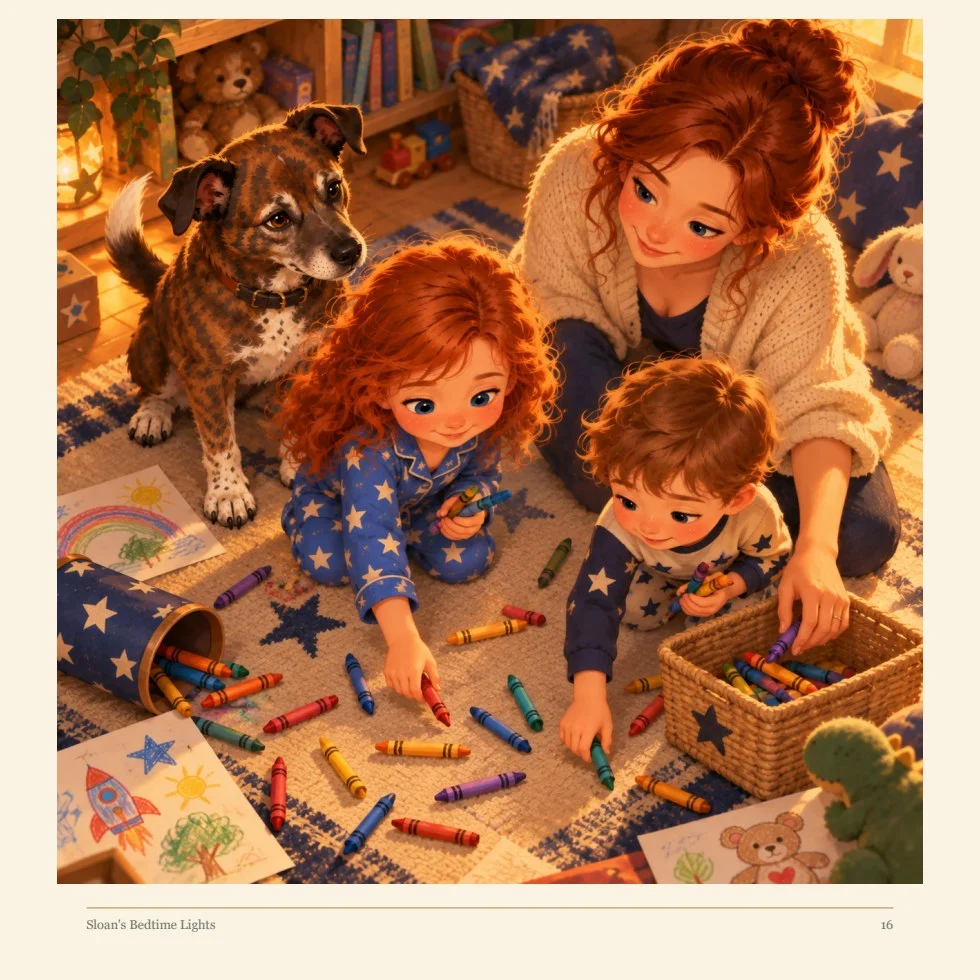
Name the grown-up who is nearby. You might say, “Those crayons fell. We can ask whether help is wanted.” Make clear that the child does not have to join in.
An offer is different from taking over.
READING TOGETHER · FOR GROWN-UPS
You do not need a question for every page. These are a few places to leave room for a child’s response, or to simply keep reading.
BEFORE YOU BEGIN
Say that they can look, listen, talk, or stop. Read in your own voice if you prefer. Nothing has to be finished tonight.
Each pause below is original companion guidance, not a script from the story or a test of understanding. Use the physical PDF page number; the printed footer is two pages lower.
Open the family reading PDF (opens in a new tab)PHYSICAL PDF PAGES 17–19
Name the grown-up who is nearby. You might say, “Those crayons fell. We can ask whether help is wanted.” Make clear that the child does not have to join in.
An offer is different from taking over.
PHYSICAL PDF PAGE 21
After the talking passage, pause yourself. Try, “Is there something you want a turn to say?” Do not turn listening into a demand for silence.
Both people get to have words.
PHYSICAL PDF PAGES 22–23
Say, “They do not want a hug, so we stop.” Do not ask the child to act out touch or give a reason. If they want, consider what leaving space might sound like.
No hug needs no replacement.
PHYSICAL PDF PAGES 25–27
You might say, “Being cross or tired does not make you a bad person. If feelings were hurt, I can help us understand and repair.” Do not require an account of their day or a forced apology.
The adult helps with repair.
PHYSICAL PDF PAGES 29–33
Offer a simple choice: “Would you like company, comfort, or some space?” Respect the response, including no response. Close the book whenever it feels like enough.
Rest does not need to be earned.
OFF THE SCREEN, IF YOU LIKE
Print just the conversation page below on Letter or A4. Choose “Fit” in the print dialog. There are no boxes to tick, personal details to fill in, or answers to hand in.
YOU ARE KIND · A PAGE TO KEEP NEARBY
Original companion suggestions to say together, not a checklist to complete. Passing, pausing, and stopping are always welcome.
“Would you like help, or would you like to try on your own?”
Grown-up: offer one small, manageable possibility. Leave room for no.
“I’m listening. Then I have something to say, too.”
Grown-up: help both voices find a turn. Silence can be a response.
“Okay, no hug. I’ll move back a little.”
Grown-up: respect a no immediately. Do not ask for a reason or replacement touch.
“I need help too. Could you stay with me?”
Grown-up: receiving care belongs in this conversation. Adult problems remain adult responsibilities.
Nothing to earn. Nothing to hand in. You can rest.
Official companion to Sloan’s Bedtime Lights’ You Are Kind. Full book and matching audio: sloansbedtime.com/books/free/you-are-kind · sloansbedtime.com/episode/6“These are possibilities to think about. You do not have a kindness test to pass before bedtime.”