MAKE ROOM · THREE EVERYDAY MOMENTS
There is more than
one way to care.
Notice what is happening. Ask or listen. Respect a choice. There may be care to offer, or care you need to receive.
No correct answers. No scores. Just some words you might borrow together.
SITUATION 01 · Physical PDF pages 18–19
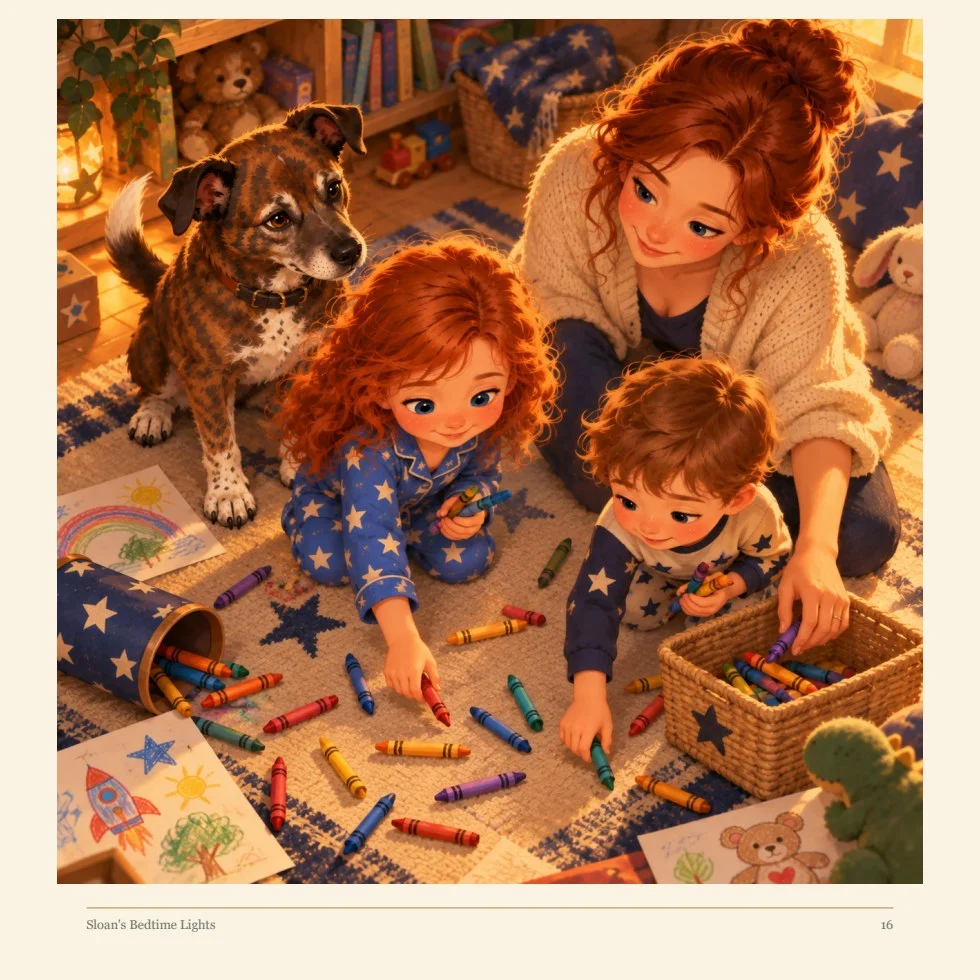
The crayons have scattered.
Some crayons have fallen onto the floor. A grown-up is nearby. Before reaching in, there is room to ask.
WORDS YOU COULD BORROW
There is no answer to get right.
Choose some words to see one possibility, or read all the alternatives below. Leaving is a valid choice, too.
Read every dialogue alternative
Original companion suggestions, not quotations from the book. These remain available without choosing anything.
Ask what would help
“Would you like help with the crayons, or would you rather do it yourself?”
Leave time for their answer. An offer can be declined.
Listen
“Tell me where you want these to go.”
You can listen before moving anything. You do not need to sort every crayon.
Give some space
“Okay. I’ll leave these here and give you room.”
If they would rather gather the crayons themselves, you can step back.
Ask a grown-up
“Could you help us decide what to do?”
The nearby grown-up can check that helping is safe and manageable.
I need help too
“I want to help, but I need a hand too.”
You can ask for help or choose not to join in. Your needs count here.
SITUATION 02 · Physical PDF page 21
You have something to say, too.
Someone is talking, and a thought is waiting in your mind. Listening does not mean your own voice disappears.
“I’m listening.”
“I have something
to say, too.”
WORDS YOU COULD BORROW
There is no answer to get right.
Choose some words to see one possibility, or read all the alternatives below. Leaving is a valid choice, too.
Read every dialogue alternative
Original companion suggestions, not quotations from the book. These remain available without choosing anything.
Ask what would help
“Can I have a turn when you finish that thought?”
An adult can help make sure both people get time to speak.
Listen
“I’m listening. Then there’s something I’d like to tell you.”
A pause need not mean waiting forever. Your words matter too.
Give some space
“I’m going to sit over here. I’d still like a turn after.”
You can step away from a busy conversation without giving up your voice.
Ask a grown-up
“Could you help us take turns talking?”
A grown-up can make space for a quieter voice as well as a louder one.
I need help too
“I’m finding it hard to wait. Can you help me get a turn?”
If something is urgent or unsafe, tell a grown-up now; you do not have to wait.
SITUATION 03 · Physical PDF pages 22–23
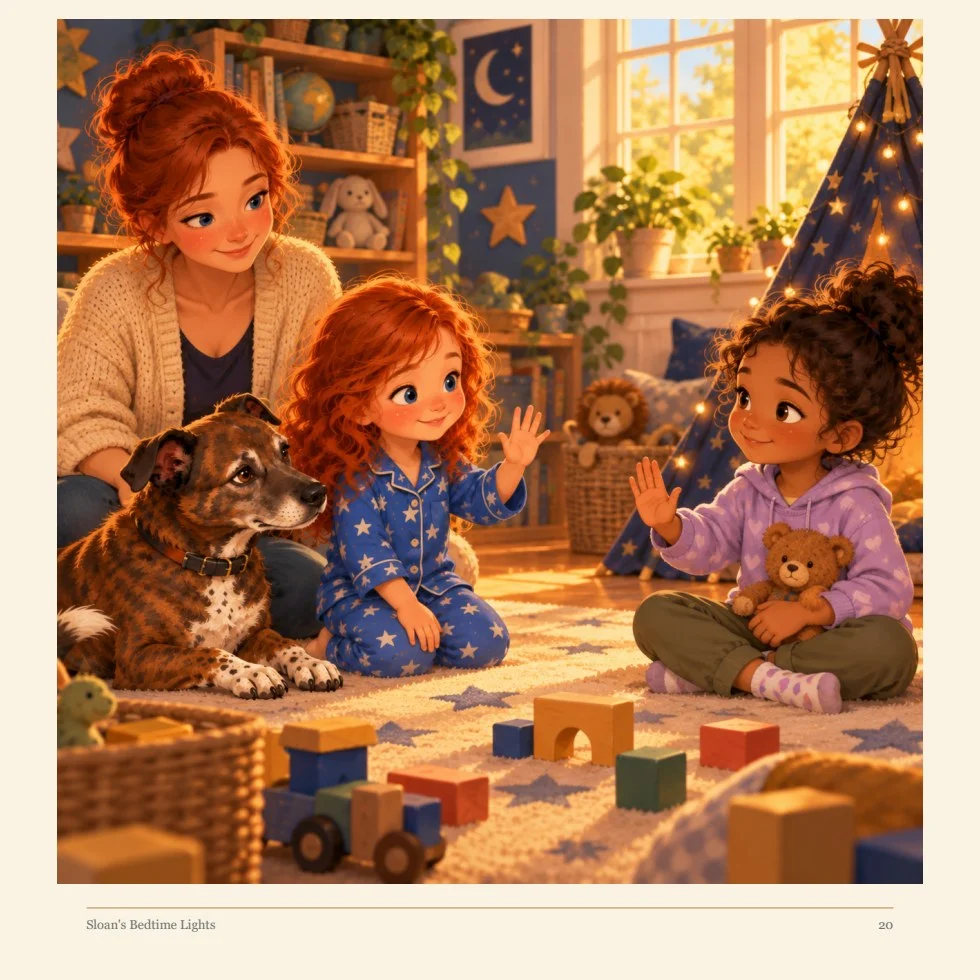
A friend does not want a hug.
The hug stops here. No persuasion, no asking again, and no different kind of touch without permission. A little space is already a caring response.
WORDS YOU COULD BORROW
There is no answer to get right.
Choose some words to see one possibility, or read all the alternatives below. Leaving is a valid choice, too.
Read every dialogue alternative
Original companion suggestions, not quotations from the book. These remain available without choosing anything.
Ask what would help
“Okay, no hug. I’ll give you space.”
If your friend later wants to talk, you can ask what would help. They do not owe an explanation.
Listen
“I hear you. No hug.”
Listen without trying to change the answer. No other touch is assumed.
Give some space
“Okay. I’ll move back a little.”
Their choice is respected immediately. You do not need to replace the hug with another gesture.
Ask a grown-up
“Could you sit with me for a moment?”
Ask a grown-up for your own support, not to persuade your friend to accept a hug.
I need help too
“I feel disappointed. I’m going to ask my grown-up for comfort.”
Your feelings can have care while your friend’s no stays no.
ORIGINAL COMPANION CONVERSATIONS
These suggestions are not lines from the story. Use what fits, pass on what does not, and leave whenever you like. A grown-up can share the moment without turning it into a test.
We can stop and rest“Perhaps a friend does not want a hug. You can respect that. A kind word, or a little space, can be kind too.”